
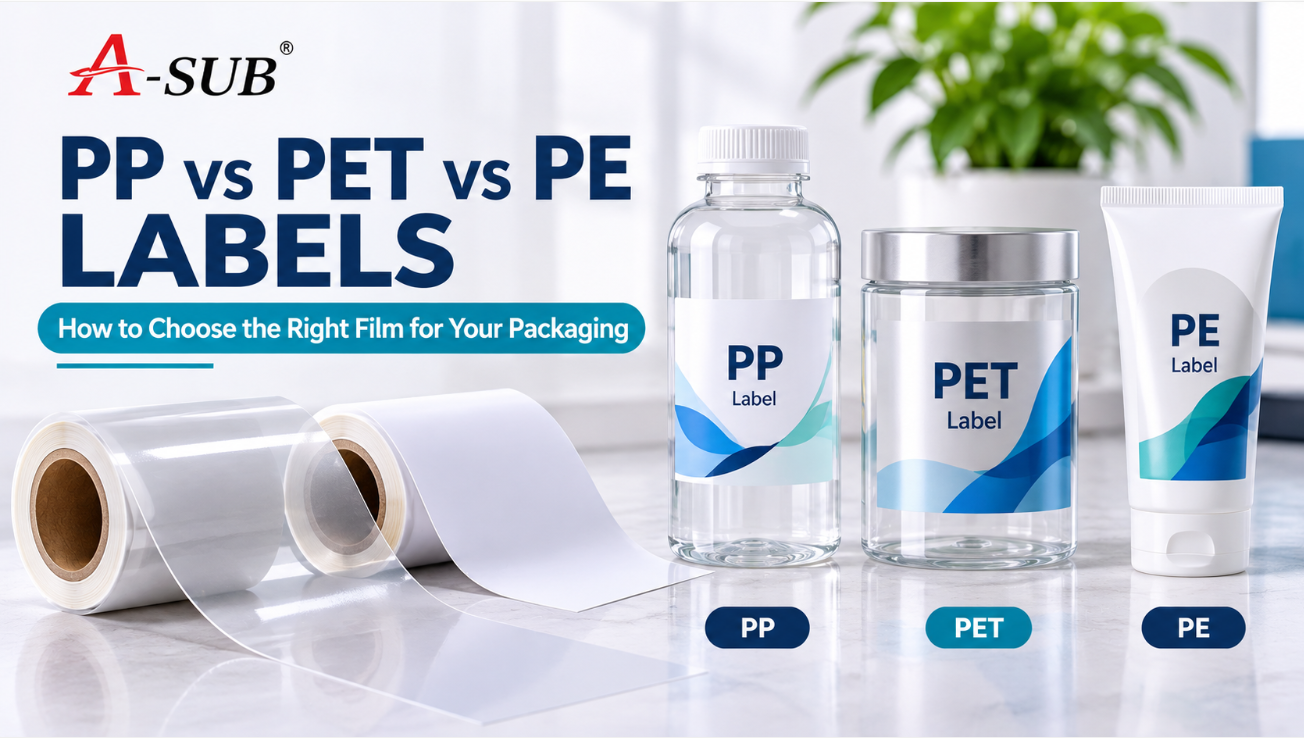

When choosing self-adhesive labels for product packaging, the face material is one of the most important decisions. It affects how a label looks, how it behaves during application, and how well it fits the shape of the package.
Among the commonly used film label materials, PP, PET, and PE are three important options. They are all plastic-based materials, but their physical properties and typical applications are different.
For label distributors, wholesalers, packaging manufacturers, and printing businesses, understanding these differences helps avoid material mismatches and makes product selection more efficient.
1. What Are PP, PET, and PE Labels?
PP Labels – Polypropylene
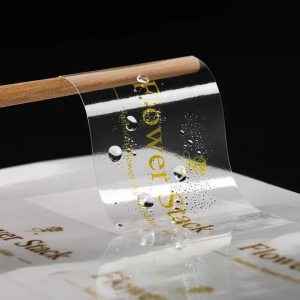
PP stands for polypropylene. It is widely used in self-adhesive film labels because it offers a balance of stiffness, flexibility, and dimensional stability.
PP label materials are available in different finishes, including glossy white, matte white, transparent, and metallized PP. They are commonly considered for rigid packaging, bottles, jars, and other containers that do not undergo significant squeezing during use.
PET Labels – Polyethylene Terephthalate
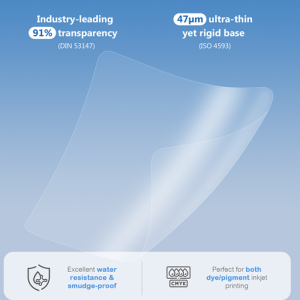
PET stands for polyethylene terephthalate, commonly referred to as polyester. Compared with more flexible film materials, PET is generally more rigid and dimensionally stable. It is often selected when a label needs to maintain its shape and withstand more demanding handling conditions.
PET label materials can be available in transparent, glossy white, matte silver, glossy silver, golden, and decorative textured finishes.
PE Labels – Polyethylene
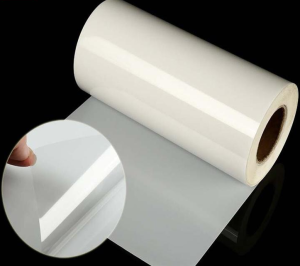
PE stands for polyethylene. It is generally softer and more flexible than PP and PET label facestocks. Its flexibility allows it to adapt more easily to curved and squeezable containers.
Common PE label formats include white PE, transparent PE, and metallized PE. PE labels are often considered for squeeze bottles, cosmetic tubes, personal care packaging, and flexible containers.
2. What Are the Main Differences Between PP, PET, and PE Labels?
| Comparison Factor | PP Labels | PET Labels | PE Labels |
|---|---|---|---|
| Material | Polypropylene | Polyethylene Terephthalate | Polyethylene |
| Flexibility | Moderate | Relatively low | High |
| Stiffness | Moderate to high | High | Low |
| Dimensional stability | Good | Generally very good | More dependent on film grade |
| Conformability | Suitable for many regular containers | Better for relatively stable surfaces | Suitable for squeezable and curved containers |
| Typical applications | Rigid bottles, jars, packaging | Durable identification and stable packaging | Squeeze bottles, tubes, flexible packaging |
These are general material tendencies, not universal performance specifications. The actual result depends on film grade, thickness, surface treatment, adhesive, liner, and application conditions.
3. What Are PP Labels Commonly Used For?
PP labels are a popular option for packaging applications where a balance of appearance, printability, and material stability is required. They are commonly considered for food and beverage packaging, cosmetic packaging, and household product containers.
PP is not automatically the best choice for every bottle. If the container is frequently squeezed or has a highly irregular shape, a more conformable material may be more appropriate.
4. What Makes PET Labels Different?
PET labels are generally selected when dimensional stability and material durability are important considerations. Compared with PP and PE, PET typically offers greater stiffness.
PET labels can be considered for product identification, industrial labeling, and packaging with distinctive finishes. The actual temperature, chemical, and abrasion resistance must be verified for the complete label construction.
5. Why Are PE Labels Suitable for Squeezable Containers?
PE labels are known for their flexibility and conformability. Unlike more rigid film materials, PE can adapt more easily to packaging that changes shape during normal use.
PE labels are often considered for cosmetic tubes, squeezable bottles, and selected flexible packaging applications.
Buyers should test the complete label construction for adhesion, edge lifting, flexibility, print integrity, and performance under the intended conditions.
6. How Should You Choose Between PP, PET, and PE Labels?
Step 1: Is the Container Rigid or Squeezable?
- For relatively rigid bottles and jars, PP may be a suitable starting point.
- For squeezable bottles and flexible tubes, PE may be more suitable.
- For applications requiring greater dimensional stability, PET is worth evaluating.
Step 2: Does the Label Need to Follow a Curved Surface?
A label applied to a flat or gently curved surface has different requirements from one applied to a soft, squeezable container. A more flexible material may be needed when the packaging changes shape during use.
Step 3: What Printing Process Will Be Used?
Not every PP, PET, or PE film is suitable for every printing process. Buyers should confirm compatible printer technology, surface coating, ink or toner, printing settings, and feeding requirements.
Step 4: What Adhesive Is Required?
The adhesive is just as important as the face material. Different packaging surfaces may require different adhesive solutions. Consider initial tack, final adhesion, container surface, application temperature, and storage conditions.
Step 5: What Are the Environmental Conditions?
Consider whether the label will be exposed to moisture, oil, chemicals, heat, refrigeration, or frequent handling. For demanding applications, request technical data and test samples under realistic conditions before placing a bulk order.
7. What Should Wholesalers Look for in a Film Label Supplier?
- Clear product specifications: Material type, surface thickness, finish, adhesive information, and available sizes.
- Printer compatibility: Confirm the compatibility of each specific product.
- A range of material options: Different PP and PET finishes can help distributors serve varied packaging requirements.
- Sample testing: Evaluate printing results, feeding performance, adhesion, and appearance before bulk purchasing.
- Consistent supply: Consistency in specifications and product quality is important for repeat orders.
8. Explore A-SUB Printable PP and PET Labels
A-SUB offers self-adhesive inkjet sticker and vinyl label materials, including PP and PET options.
Its publicly listed PP label range includes Matte PP Y100MP-WD and Glossy PP Y100GP-WD. The listed surface thickness for both models is 100μm, with water glue.
A-SUB’s PET range includes transparent, glossy white, silver, golden, and decorative finishes. Selected models are also listed for laser printing.
Looking for a printable film label supplier? Contact A-SUB to confirm available models, specifications, printer compatibility, sample options, and order requirements.
Conclusion
PP, PET, and PE labels each have different material characteristics. PP is a practical option for many rigid packaging applications. PET is worth considering when greater dimensional stability and durability are important. PE is often a better starting point for squeezable containers and flexible packaging.
There is no single material that is best for every label application. The right choice should be based on the container shape, printing process, adhesive requirements, and actual operating conditions.
Leave a Reply